Are we Learning from our mistakes
Bill Gates, chairman, Microsoft

Gates had one of his infamous “Think Weeks” where we locked himself in a retreat for 1 – 2 weeks — no telephone calls, no email – with nothing but time to think.
He realized he totally missed the Internet opportunity.
The next day, he issued a company wide memo that
pretty much said EVERY project and product in Microsoft had to incorporate the
Internet.
Warren Buffett, CEO, Berkshire Hathaway
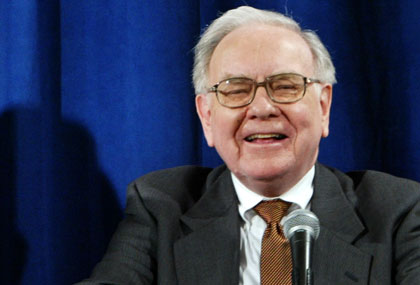
"I started out to buy
Fannie Mae, for example, back in 1988 or so. And for what reason or another, I
just didn't follow through.
We'd have made about a billion and a half dollars on that. I think we made
about 5 million. Those are the mistakes you don't see. The mistakes you don't
see are way bigger."
From a video on the WarrenBuffettBlog
YouTube channel
Richard Branson, founder
and chairman, Virgin Group

"I find it very difficult to think of
mistakes; not that I don't make any but because I
was brought up to look only at the good things in life ... As for what lost the
most money, probably Virgin Cola. It is still No 1 in Bangladesh though."
From a 2006 interview
with the Guardian
Mickey Drexler, CEO, J.
Crew

"After our lunch [Mickey Drexler] had been
thinking about the mistake question and reading the news about Gap closing
stores in America to expand in China. That had made him realize
what his mistake was. So, though he was in California, he called to tell me.
The mistake happened when he was at Gap and the brand was undergoing a
“rapid expansion”, increasing its real estate holdings by almost 70 percent, a
move he opposed but ultimately oversaw. Now he says, “I didn’t fight the board
hard enough to stop it. I should have fought harder.” He isn’t blaming them for a bad decision;
he’s blaming himself for caving in."
Reid Hoffman,
co-founder, LinkedIn

"Probably the biggest mistake that I made
personally is I knew early on that I wanted to go into start-ups and creating
the kind of software that could help change the lives of millions of people.
And basically what I did is I kind of went, okay, I need a set of titles
and I need a checklist of skills, and I ran through all that, and that wasn’t a
useless thing, but no one gave me the right advice for doing this — is that
actually your network, in essentially, is your career. ... If I had had that realization, I probably
would have gone and begged my way into a job at Netscape."
From a 2009 interview
with Big Think
Larry Fink, chairman and CEO,
BlackRock

“Back when I was leaving my job at First Boston,
I was going through a lot of turmoil about what I wanted to do and where I
wanted to do it. It was pretty clear to me that the buyers of securities didn’t
understand the risk of the securities that they were buying ... so I came up
with this idea that we should start an investment management firm that focused
on risk management.”
Brilliant idea, right? Unfortunately, Fink “didn’t have the confidence” in himself
to start the company. “It was huge self-doubt,” he said pausing for emphasis. “So I went to
see Steve Schwarzman and Pete Peterson at Blackstone and they loved the idea,”
because who wouldn’t? Wall Street had never seen anything so awesome. “Within 3
days we came to terms of a partnership. They gave us a 5 million line of credit
to start this company and I in turn gave them 40% stake. They believed in me
more than I believed in myself. They made the right investment decision. I didn’t.”
Carol Bartz, former president and CEO,
Yahoo!

"I've made a lot of mistakes. There isn't
one that stands out. I make mistakes every week, every month, every year.
"I would say. . . I actually wish I had started having children
younger. I was 40 when I had my daughter. And I wish I would have started that
younger so I could have had more children."
From an interview with theTech Museum
Raul Vazquez, EVP global e-commerce,
Walmart

"When I was an engineer at Baxter, we
developed a new cap for an iodine bottle that would save hundreds of thousands
of dollars. We did a ton of analysis and were confident that the caps would
work, so we decided to make the entire change at once.
Then, we started hearing reports that the caps
were leaking — it was very stressful. I learned that
it can pay to be patient, and do things in a planned, rolled-out fashion."
From
a 2009 interview with Fortune
Jennifer Hyman, CEO,
Rent The Runway

"One issue was on technology. We always
knew we wanted to have an in-house technology team but we also wanted to get
the site up very quickly and in order to do so we used an outsourced team based
in India. This meant that our site got up in time for the holiday season, which
was great in terms of sales, but at
the end of the day, there was a lot of work to clean up on the back end of our
site. Another mistake is that I wish we had ordered more inventory. We never predicted this much demand, which is
a good problem to have."
We never predicted this much demand, which is a
good problem to have."
From an April 2010
interview with Kembrel.com.
Jamie Dimon, chairman,
president and CEO, JPMorgan Chase

Mark Wilson/Getty Images
“My biggest mistake, probably of my whole
career, was not closing down our mortgage broker business sooner."
Jack Welch, former CEO, GE

"My biggest mistake by
far was not moving faster. Pulling off a Band-Aid
one hair at a time hurts a lot more than a sudden yank. Of course you want to
avoid breaking things or stretching the organization too far — but generally
human nature holds you back. You want to be liked, to be thought of as
reasonable. So you don't move as fast as you should. Besides hurting more, it
costs you competitiveness. EVERYTHING should have been done in half the time.
When you're running an institution like this
you're always scared at first. You're afraid you'll break it. People don't
think about leaders this way, but it's true. Everyone
who's running something goes home at night and wrestles with the same fear: Am
I going to be the one who blows this place up? In retrospect, I was too
cautious and too timid. I
wanted too many constituencies on board. Timidity causes mistakes."
From the 1993 book "Control Your Destiny or Someone Else Will" by Noel M.
Tichy and Stratford Sherman
Lee Iacocca, former chairman, Chrysler

“I think it was the biggest mistake of my
business career,” he says of hiring Bob Eaton from General Motors Corp. in 1992 as Chrysler's president and
chairman-in-waiting.
Eaton was chairman of GM Europe at the time. “I
got the wrong guy. I wanted Hughes or Smith (Louis Hughes or John F. Smith Jr.,
then both high-ranking GM executives).” Iacocca blames himself. “I didn't do my
due diligence,” he says. “Eaton was always a staff guy. He never ran a
division.”
From a 2003 interview
with WardsAuto
Alexis Maybank, co-founder, Gilt
Groupe

"When you scale so quickly, you inevitably
make some hiring mistakes. And every part of your business is going to break at
one point or another. In 2009, we launched a business that took a more mass
market approach to brands. But our customers wanted luxury."
From an interview with
Business Insider
Ted Turner, founder, TBS and CNN

"The biggest mistake I ever made, really,
and Malone told me not to do it, was bringing
Time Warner into the consortium of cable operators for that five hundred and
something million that we needed to pay down the debt that we incurred when we
acquired MGM. I shouldn’t have done
that, I shouldn’t have let them have the veto, but I was tired too. That was
the other thing. I was tired. After thirty years of working 18 hours a day,
five or six days a week with one crisis after another for twenty years, I was tired.
And when you’re tired you don’t make the best decisions and I knew we were
selling out. I didn’t know what the consequences would be.
"I never thought in my wildest dreams that I would actually lose my
job. I just couldn’t believe that, but it happened. It happened. So my advice
to any younger people in the room is be real careful who you sell to if you
sell your company. Be prepared to leave
it."
From a 2001 interview with the Hauser Project
Marc Andreessen, co-founder, Netscape

"The biggest one that
we're still kicking ourselves over is probably Square. I think Jack Dorsey is one of the most
phenomenal founder-CEO's in the industry and we probably made a huge mistake on
that one when he first came in.
"We overthought the deal and we probably
just should have said Jack Dorsey, check. And write the check. That's probably
the big one."
From a 2012 interview with Bloomberg TV
Rio Caraeff, president and CEO, VEVO

"When I was much younger, I was traveling on a business trip when a
close family member passed away at home and I decided to not travel home for
the funeral as I had made the decision that my work was more important at the
time. I look back in regret
at that decision frequently and have now since realized that family does come
first."
From a 2009 interview
with Fortune
Max Levchin, co-founder, PayPal

"I am not much given to regret, so I
puzzled over this one a while. Should have taken much more statistics in
college, I think."
From a 2009 interview
with Fortune
Mark Cuban, chairman, HDNet

Business Insider / Matthew Lynley
"Professionally, it was not aggressively going after the MPAA (Motion
Picture Association of America) and RIAA (Recording Industry Association of
America) in negotiations for the DMCA (Digital Millennium Copyright Act).
Another mistake was not applying for patents. I personally think patents are for the most part
worthless and don’t protect your business, but at Broadcast.com we did so many
original and unique things in streaming, multicasting, uploading of content
that now that the climate of litigation has changed, that portfolio would be
worth a ton of money."
From a 2011 interview
with TechCrunch.
Thomas Stemberg, co-founder and former
CEO, Staples

"About two years later than our
competitors, we also began to deliver. Probably
over time that mistake cost us $100 million in sales and $10 million in profits. Today our delivery business represents $2.5
billion.
That was one of the few times in our corporate
history when we made a decision based on cost factors as opposed to customer
preferences. It reminded me once again that whenever you plan your business,
you're way better off starting first with the customer and moving next to cost
rather than the other way around."
From a 2001 interview
with Inc.
Willie Walsh, CEO,
International Airlines Group

"Haven’t made it yet! People shouldn’t be
afraid of making mistakes as long as they learn from them and don’t make the
same mistake twice."
From a 2011 interview
with Marketing
Society
Reed Hastings, CEO, Netflix

Hastings said his biggest
mistake was trying to phase out Netflix's once-trailblazing DVD-by-mail rental
service more quickly than millions of customers wanted. He and his management team concluded a few
years ago DVDs that are destined to obsolescence, so they began concentrating
on streaming video over high-speed Internet connections.
Ending Netflix's practice of bundling
DVD-by-mail and Internet streaming subscriptions together so people are forced
to buy them separately was meant to push more households into weaning
themselves from discs. Customers instead saw the move as a betrayal by a greedy
company and canceled their subscriptions in droves.
From a 2011 interview
with the Associated Press
Alan Mulally, president and CEO, Ford

When asked what his biggest mistake on the job
has been, [Mulally] falls uncharacteristically silent, then says: “I don’t have a good answer for that.”
From a 2011 interview
with the Financial Times


